
A Turning Point in India’s Dairy Journey
India proudly stands as the world’s largest producer of milk, a historic achievement credited largely to the White Revolution. While this revolution solved a major nutritional and economic crisis, it also raised a crucial question that India must confront today:
Did the race for higher milk production compromise milk quality, human health, and indigenous cow breeds?
With the rise of lifestyle disorders, digestive issues, and growing global awareness about A2 milk, India is once again at a crossroads. The time has come to rethink our dairy choices and revive the wisdom rooted in our land.
The White Revolution: A Necessary Beginning for a Young Nation
During the 1960s, India faced severe milk shortages amidst rapid population growth. Malnutrition was widespread, and rural farmers lacked reliable income sources.
To address this, the Government of India established the National Dairy Development Board (NDDB) in 1965, followed by Operation Flood (1970–71)—one of the world’s largest agricultural movements.
Objectives of the White Revolution
- Ensure consistent milk supply to urban India
- Strengthen rural dairy cooperatives
- Increase farmer income and milk productivity
- Reduce dependency on milk imports
Achievements
- India became the world’s largest milk producer
- Per capita milk availability more than doubled
- Rural livelihoods improved significantly
- Dairy infrastructure expanded nationwide
The White Revolution was essential and transformative, but it was never meant to be the final destination.
Where Quantity Overtook Quality in Indian Milk Production
To meet rising demand, crossbreeding became the dominant strategy. Indigenous Indian cows—known for moderate yields but superior milk quality—were crossed with exotic breeds such as:
- Holstein Friesian
- Jersey
The Hidden Shift: A1 vs A2 Milk
This breeding shift altered the natural protein composition of milk.
- Crossbred and exotic cows largely produce A1 milk
- Indigenous Indian cows naturally produce A2 milk
A1 milk contains A1 beta-casein, which during digestion may release BCM-7 (Beta-casomorphin-7)—a bioactive compound studied for its potential links to:
- Digestive discomfort
- Inflammation
- Type-1 diabetes
- Heart health concerns
- Neurological conditions (under ongoing research)
A2 milk, on the other hand, contains A2 beta-casein, which is:
- Easier to digest
- Closer to the milk consumed in India for thousands of years
- Traditionally used in Ayurveda and Panchagavya
Impact on Indigenous Indian Cow Breeds
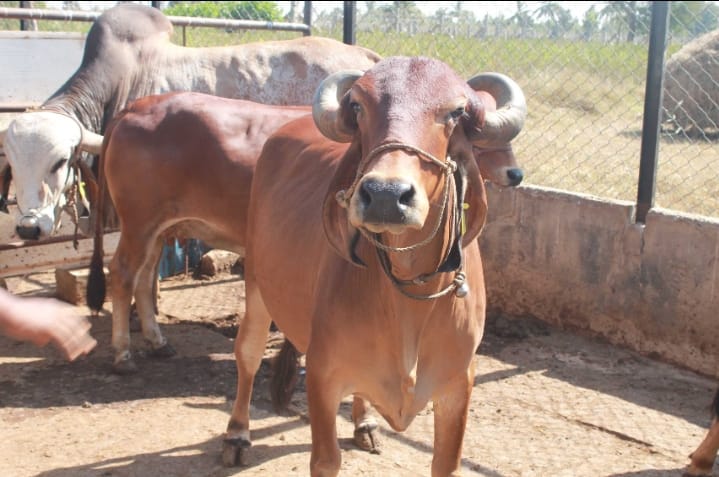
The widespread push for crossbreeding led to a sharp decline in native cow populations such as Gir, Sahiwal, Red Sindhi, Tharparkar, and others.
Why Indigenous Cows Matter
- Naturally heat-tolerant and climate-resilient
- Higher disease resistance
- Require lower external inputs
- Integral to cow-based organic farming
- Produce dung and urine vital for:
- Natural fertilizers
- Soil regeneration
- Sustainable agriculture
The erosion of indigenous breeds weakened traditional rural ecosystems, increasing dependence on chemicals, veterinary drugs, and external feed inputs.
The Global Shift Back to A2 Milk and Indigenous Genetics
Ironically, while India moved away from its roots, the world began rediscovering them.
Countries like:
- Australia
- New Zealand
- UK
- USA
are now actively promoting:
- A2 milk
- Indigenous and native cattle genetics
- Ethical and sustainable dairy farming
What India once possessed naturally is now being reclaimed globally as a premium, health-focused choice.
gauras.in: Reviving India’s Dairy Heritage
At gauras.in, we believe the future of dairy lies in balance—between productivity and purity, tradition and science.
Our Commitment
- Conservation of indigenous Indian cow breeds
- Production of 100% pure A2 Milk
- Traditional Bilona method A2 Ghee
- Cow-based organic farming of:
- Vegetables
- Fruits
- Spices
- Ethical, transparent, and sustainable dairy practices
Our approach respects:
- The cow
- The farmer
- The consumer
- Nature itself
Conclusion: India’s Next Leap — The A2 Revolution
The White Revolution solved scarcity.
The present demands a quality-driven, health-centric revolution.
By returning to indigenous cows and A2 dairy, India can:
- Improve public health
- Revitalize rural economies
- Restore ecological balance
- Lead the global dairy movement once again
This time—not just with scale, but with wisdom and responsibility.
Jai Gau. Jai Prakriti. Jai Bharat.
Frequently Asked Questions (FAQs)
What is the difference between A1 milk and A2 milk?
A1 milk contains A1 beta-casein protein, while A2 milk contains A2 beta-casein, which is considered easier to digest and closer to traditional Indian milk.
Why is A2 milk considered healthier?
A2 milk does not release BCM-7 during digestion, which is associated with digestive discomfort and other health concerns linked to A1 milk.
Do Indian indigenous cows produce only A2 milk?
Yes, all pure indigenous Indian cow breeds naturally produce A2 milk.
What is the Bilona method of making A2 ghee?
Bilona is a traditional method where curd is churned to extract butter, which is then slowly heated to make ghee—preserving nutrients and medicinal properties.
How does indigenous cow farming support sustainability?
Indigenous cows are climate-resilient, require fewer inputs, and support organic farming through natural manure and bio-inputs.